Journal
Smart design secrets for modern Indian homes where every square foot matters
Smart Space-Saving Design Ideas Using Modular Furniture, Vertical Storage, Budget-Friendly Solutions, and Visual Tricks for Modern Indian Apartments
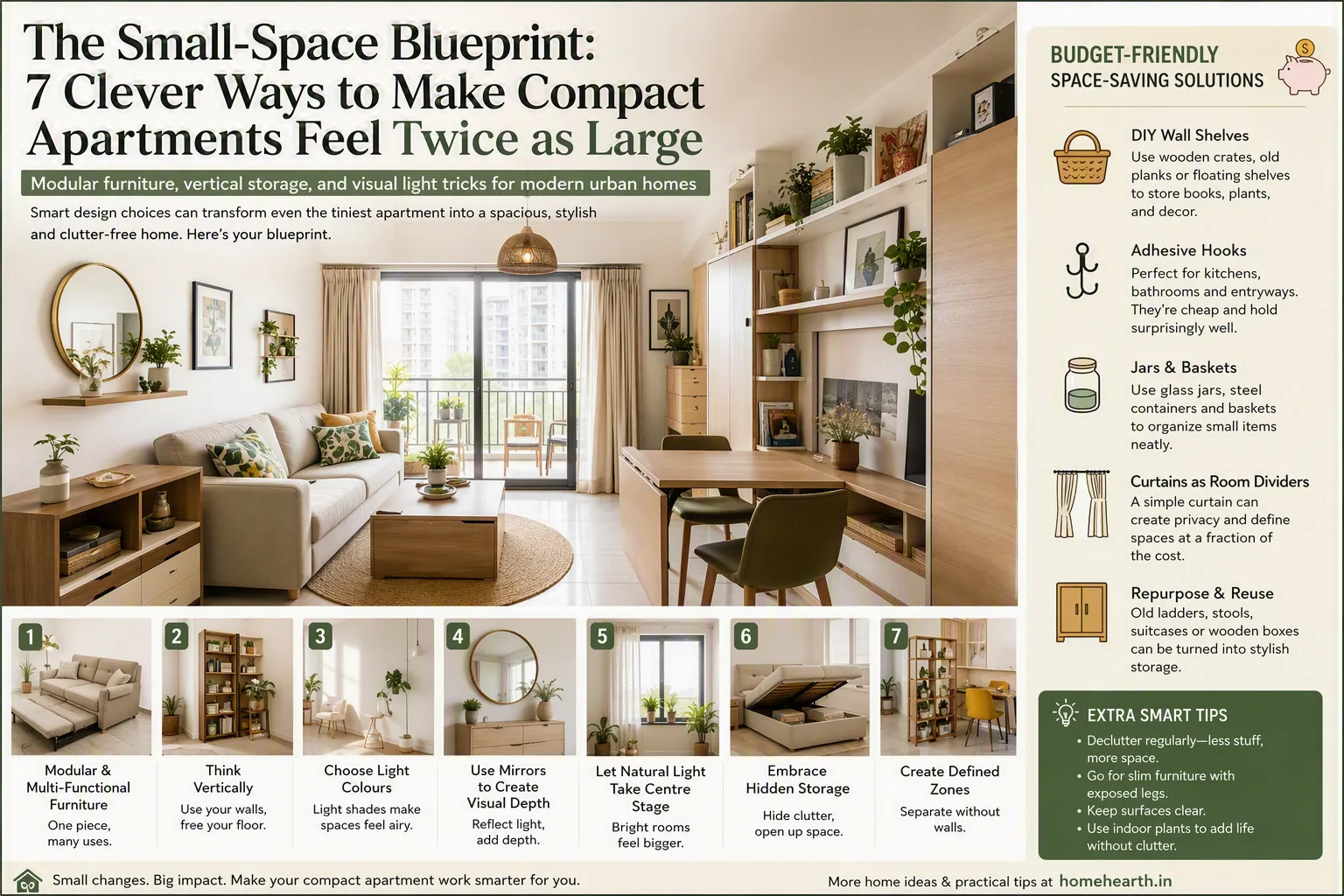
In bustling Indian cities, compact apartments have become the norm rather than the exception. Whether you live in a studio apartment in Bengaluru, a 1BHK in Mumbai, or a cozy high-rise flat in Gurugram, maximizing space is often a daily challenge. The good news? You do not need knocking down walls or expensive renovations to create a home that feels bigger, brighter, and more functional.The secret lies in thoughtful design choices. From modular furniture and vertical storage solutions to visual tricks that create the illusion of space, a few strategic upgrades can completely transform how your home looks and feels. Experts consistently highlight multi-functional furniture, vertical storage, natural light, and mirrors as effective ways to optimize compact urban homes.Here are seven practical ways to make your apartment feel twice as large while maintaining a stylish and clutter-free aesthetic.
1. Invest in Modular and Multi-Functional Furniture In a small apartment, every piece of furniture should earn its place.Instead of buying separate items for different needs, choose furniture that performs multiple functions. Sofa-cum-beds, storage ottomans, foldable dining tables, and nesting coffee tables help maximize usability without crowding the room. These solutions are particularly valuable in urban Indian apartments where living rooms often double as guest rooms or workspaces.Smart Picks:Sofa-cum-bed for overnight guestsOttoman with hidden storageExtendable dining tableNesting tables that can be tucked awayFoldable work deskHomeHearth Tip: Before purchasing furniture, ask yourself: "Can this piece serve at least two purposes?" If the answer is yes, it deserves a place in your home.
2. Think Vertically, Not Horizontally Most homeowners focus on floor space while ignoring their walls.When square footage is limited, vertical storage becomes your best friend. Floating shelves, floor-to-ceiling cabinets, wall-mounted desks, and hanging organizers help utilize unused wall space while keeping floors clear and visually open. Vertical storage is widely recommended for small apartments because it reduces clutter without sacrificing accessibility.Where to Add Vertical Storage:Above the sofaAround door framesOver kitchen countersAbove bathroom fixturesAround the bed's headboardThe result is a room that feels organized rather than overcrowded.
3. Choose Light Colours to Open Up the Space Colour dramatically influences how large a room feels.Light shades reflect more natural and artificial light, making spaces appear airy and spacious. Whites, soft greys, beiges, warm creams, and muted pastels work exceptionally well in compact Indian homes. Interior design experts frequently recommend lighter palettes because darker colours tend to visually shrink spaces.Best Colours for Small Apartments:IvoryOff-whiteSoft beigeSage greenWarm greyPowder blueTo avoid a sterile look, introduce colour through cushions, artwork, rugs, or indoor plants.
4. Use Mirrors to Create Visual Depth One of the oldest design tricks remains one of the most effective.Strategically placed mirrors reflect light and create the illusion of additional space. A large mirror opposite a window can instantly make a room feel larger and brighter by bouncing daylight throughout the apartment. Design professionals consistently recommend mirrors for compact spaces because they add depth without occupying valuable floor area.Best Mirror Placements:Opposite a balcony doorBehind a dining tableAt the end of a hallwayAbove a console unitLarge statement mirrors often work better than multiple small mirrors, which can create visual clutter.
5. Let Natural Light Take Centre Stage Poor lighting makes even large rooms feel cramped.Natural light creates openness, enhances colours, and reduces visual heaviness. In compact apartments, avoid blocking windows with bulky furniture or dark curtains. Instead, use sheer curtains, lightweight fabrics, and reflective surfaces that allow daylight to travel throughout the room. Designers highlight natural light as one of the simplest ways to make small homes feel significantly larger.Easy Fixes:Replace heavy drapes with sheer curtainsKeep window sills clutter-freeUse glass partitions where possibleAdd warm-toned LED lighting for eveningsA bright room automatically feels more expansive.
6. Embrace Hidden Storage Clutter is the fastest way to make a home feel smaller.The smartest small-space homes hide their storage in plain sight. Beds with storage drawers, benches with concealed compartments, floating cabinets, and built-in wardrobes help keep everyday items accessible yet out of view. Hidden storage supports the minimalist aesthetic while ensuring the home remains practical for family life.Hidden Storage Ideas:Storage bed for seasonal itemsSeating with lift-up compartmentsPull-out pantry drawersUnder-stair storage in duplex homesOverhead kitchen cabinetsThe less visual clutter you see, the larger your space appears.
7. Create Defined Zones Without Building Walls Open-plan layouts often dominate modern apartments, but they can feel chaotic without proper organization.Instead of building partitions, define areas using rugs, lighting, shelving, or furniture placement. Creating dedicated zones for dining, working, and relaxing adds structure and functionality without making the apartment feel enclosed. Open shelving and visual dividers can separate spaces while maintaining an airy look.
Easy Zoning Ideas: Use rugs to distinguish seating areasPosition a sofa as a room dividerAdd a slim bookshelf between zonesUse pendant lights to define dining spacesA well-zoned apartment feels larger because each area serves a clear purpose.
Final Thoughts Living in a compact apartment does not mean compromising on comfort or style. With the right combination of modular furniture, vertical storage, light colour palettes, mirrors, and clever organization, even the smallest urban home can feel remarkably spacious.The goal is not simply to fit more into your home, but to make your home work smarter for you. By reducing clutter, maximizing functionality, and enhancing visual openness, you can create a living environment that feels larger, calmer, and more enjoyable every day.Remember: In small-space living, smart design beats square footage every single time.